Projects

Technical project pages for my aerospace, robotics, and autonomy work.

I use this page to break down the engineering context, design choices, validation process, and what changed after testing.

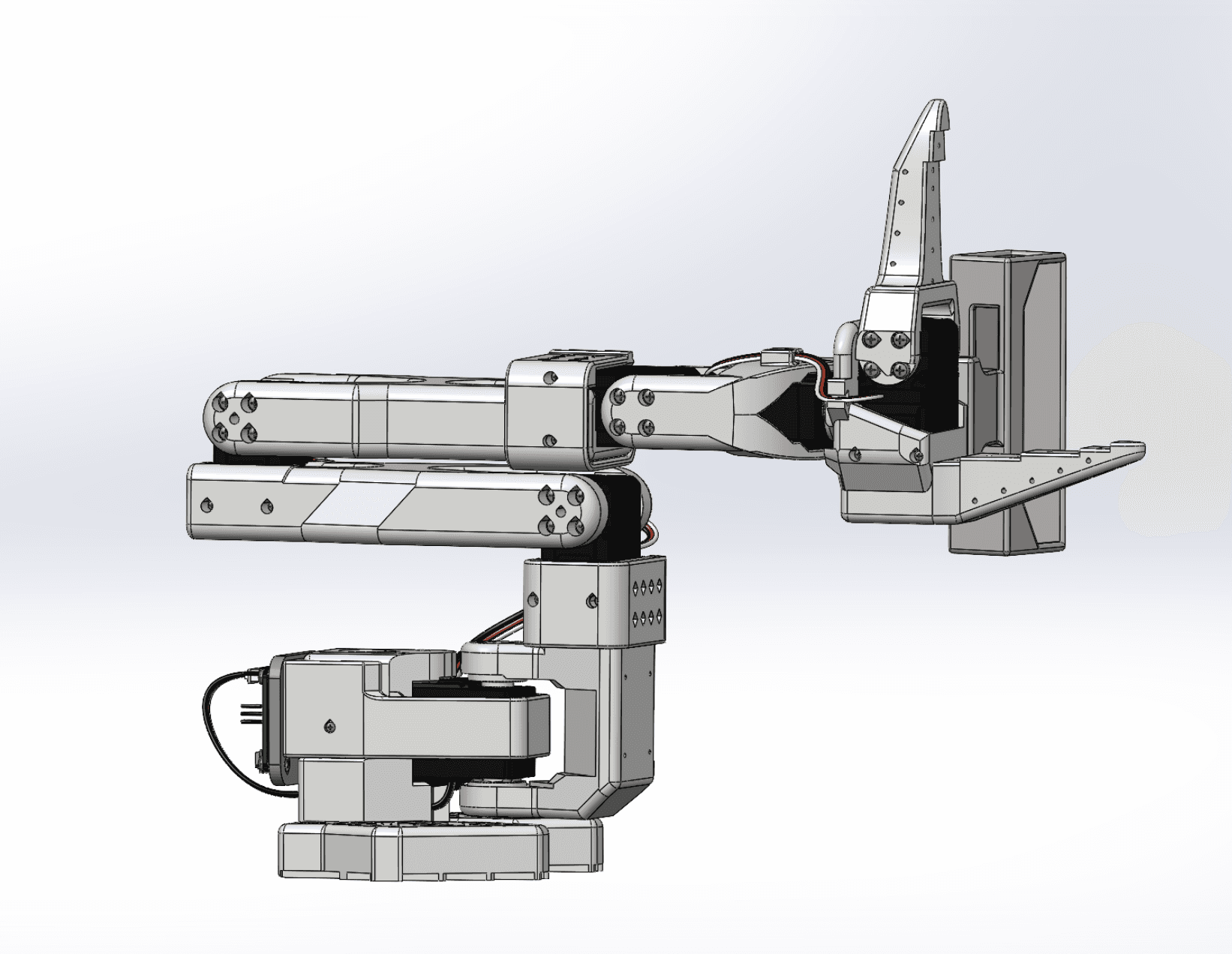
Custom SO101 robotic arm CAD used for the MAE 148 autonomous trash collection robot
UCSD MAE 148

MAE 148 - Autonomous Trash Collection Robot

Built an autonomous robot that could detect trash, drive to it, stop at the right distance, and pick it up on real hardware

Mechanical Lead and Systems IntegrationWinter 2026

I built and integrated an autonomous trash collection robot that used OAK-D Lite vision, YOLO-based detection, LD19 LiDAR stop logic, ROS2 /cmd_vel control, and a custom-mounted SO101 robotic arm. I worked on the LiDAR stop logic, arm integration, and CAD for the system, and then tested the package on the real vehicle until the sensing and control behavior lined up.

System
Vision-guided mobile manipulation
Stop Logic
Forward-cone clustering with ~0.16 m standoff
Primary Ownership
LiDAR processing, arm integration, CAD, and packaging
ROS2OAK-D LiteYOLOLD19 LiDARSolidWorksRaspberry Pi 5
Engineering Focus
  • I built the LiDAR processing path that filtered LD19 scans to a forward cone, clustered adjacent returns, and reduced them to a centroid-based stop distance for the approach controller.
  • I integrated the robotic arm mechanically and in CAD so the manipulator, sensor mast, and trash bin could coexist on the platform without breaking line of sight or the arm reach envelope.
Validation and Outcome
  • Subsystem testing was staged: standalone OAK-D validation, standalone LiDAR clustering validation, then integrated ROS2 navigation on the vehicle.
  • We got the robot to detect a target, follow it, stop before contact, and hand off to the arm from a usable vehicle package.
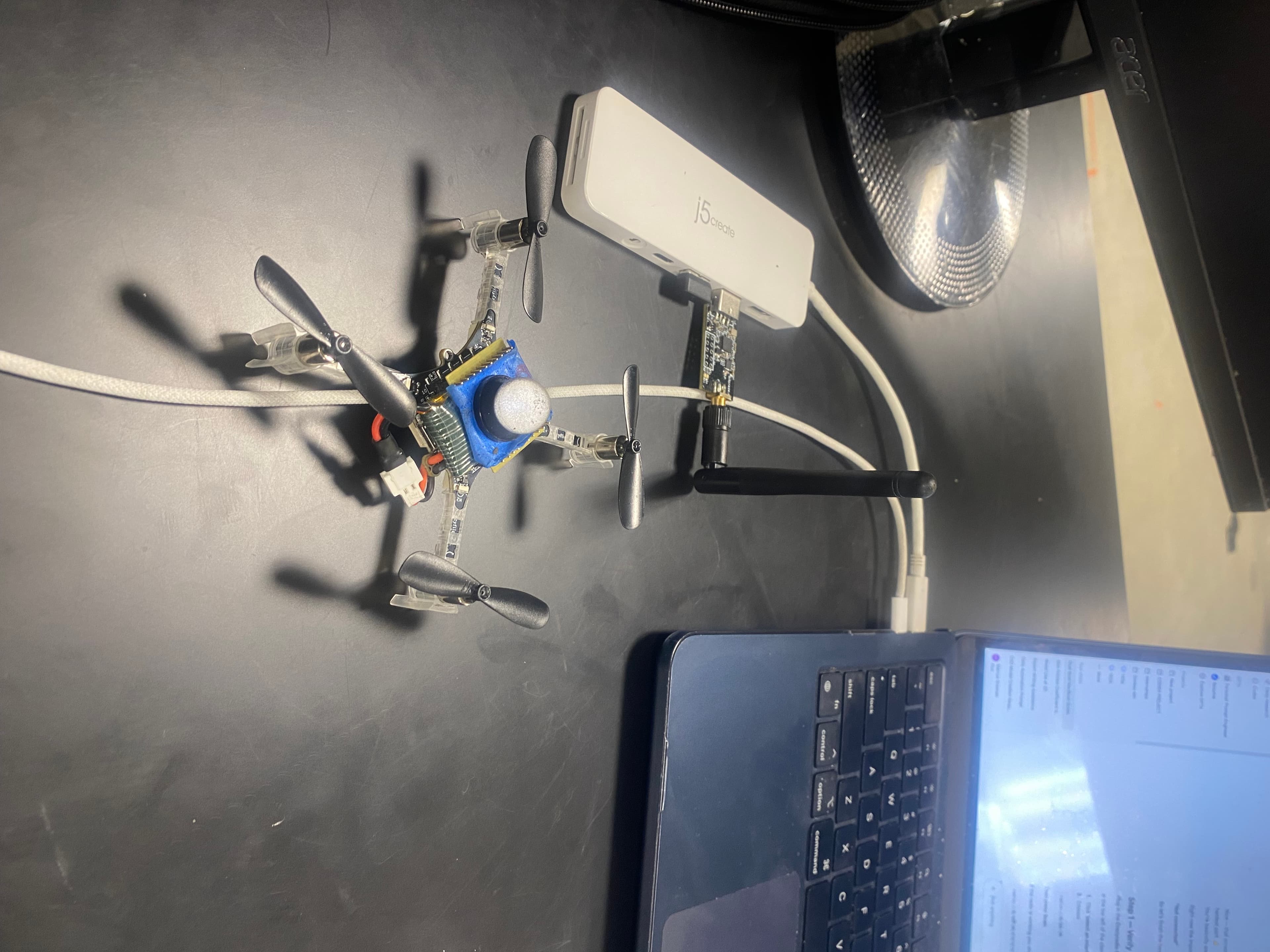
Crazyflie micro-drone used in multi-agent robotics experiments
UCSD Multi-Agent Robotics Lab

Multi-Agent Robotics Coverage

Distributed coverage and controls work in simulation and Crazyflie hardware experiments

Undergraduate Researcher2025 - Present

I work on distributed coverage and control problems in the UCSD Multi-Agent Robotics Lab and test how they hold up in both simulation and hardware. Most of the work is in the loop between ROS feedback, tuning, logging, and seeing what changes once the controller leaves the clean simulation case.

Research Focus
Coverage control and hardware validation
Platform
Crazyflie micro-quadrotors
My Work
ROS feedback, tuning, logging, and experiment execution
PythonROSCrazyflieCentroid controlVoronoi coverageSystem identification
Engineering Focus
  • I use ROS and Python tooling to make runs easy to log, compare, and debug rather than treating hardware experiments as one-off demos.
  • The work combines centroid control, coverage logic, and repeatable experiment structure so controller changes can be tied to measured behavior.
Validation and Outcome
  • I compare simulation traces against Crazyflie hardware runs and use those gaps to refine controller structure and gain selection.
  • The work sharpened how I think about disturbance, measurement quality, and controller robustness on small robotic platforms.
Rocket technical diagram representing the Daedalus project
UCSD Rocket Propulsion Lab

Rocket Propulsion Lab - Daedalus

Structures work for a student rocket targeting roughly 4,000 ft apogee

Structures Lead2024 - 2025

I worked on structures for Daedalus, a student rocket project where stiffness, mass, assembly tolerance, and aerodynamic stability all had to be balanced together. I built the structural CAD, checked tolerances, and used quick FEA passes before fabrication and validation.

Vehicle Goal
~4,000 ft apogee
Primary Scope
Structures and integration
Engineering Lens
Mass, stiffness, and stability tradeoffs
SolidWorksOpenRocketTolerance analysisBasic FEA checksInstrumentation
Engineering Focus
  • I used CAD and tolerance analysis early to expose assembly problems before fabrication rather than finding them during integration.
  • Quick FEA passes and OpenRocket trade studies helped narrow concepts before the team committed time and material.
Validation and Outcome
  • I supported propulsion and recovery validation with instrumentation and data collection tied back to design assumptions.
  • The work improved how I make structural decisions in the context of the whole system instead of optimizing one part in isolation.